 Study Architecture
  ProPEL

-BVH Architecture donates lead corporate gift for scholarships and design competition
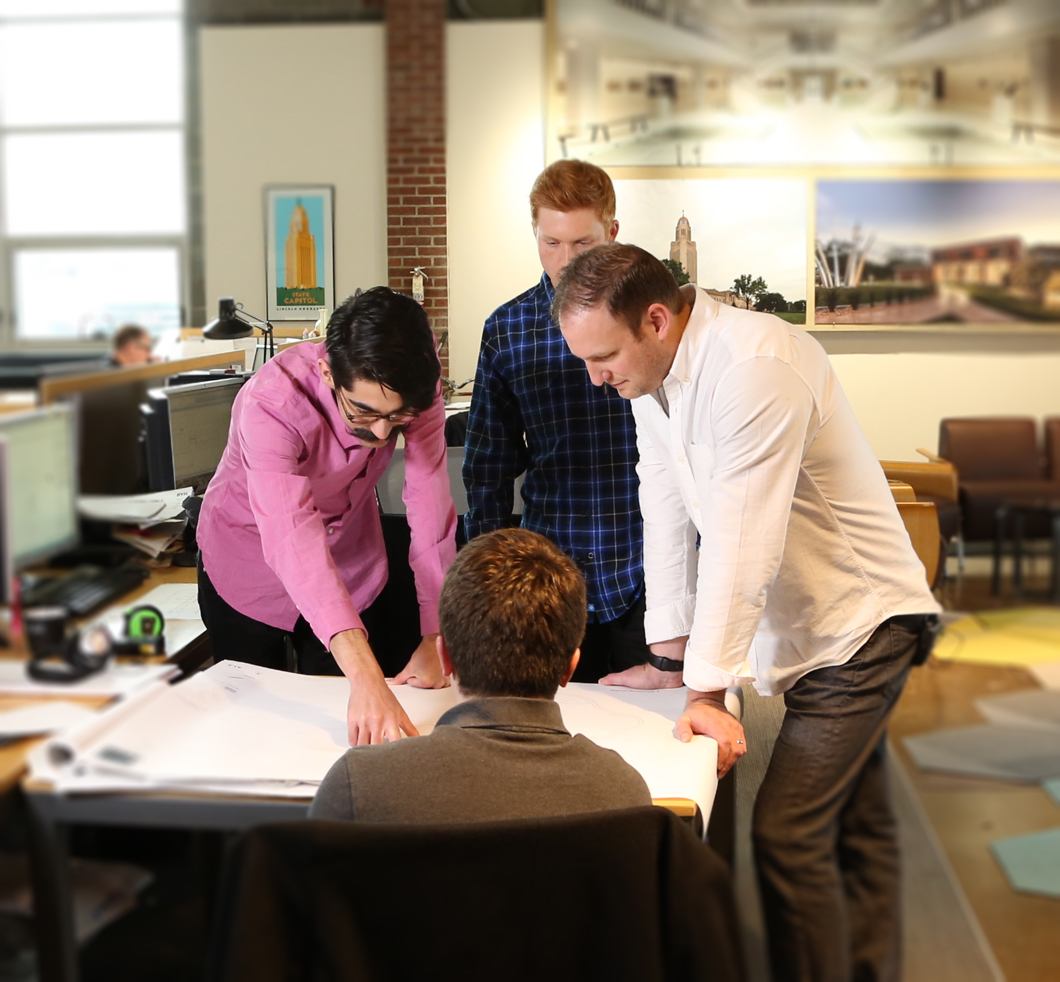
Working to elevate design excellence, student engagement and access to higher education, Nebraska-based BVH Architecture pledges $45,000 in scholarship funds as the lead corporate gift for the College of Architecture’s Norman Ochsner Matching Gift Challenge. As a matching gift, the scholarship funds will be matched by the Ochsner fund for a total impact of $90,000 for student scholarships. The scholarships will be awarded in conjunction with two BVH sponsored design competitions for architecture and interior design students. Once the funds are endowed for a year, program administrators and faculty can begin program implementation. To assist with competition administration costs, BVH is also pledging an additional $30,000.
A third-year architecture and interior design studio will be invited to participate. Participating studios may submit team or individual entries. Winners will be selected by a jury based on demonstrated creative and technical excellence in the study of architecture and interior design.
“BVH Architecture has been a long-time supporter of the college,” said Dean Katherine Ankerson. “BVH’s donation demonstrates their desire and commitment to improving the quality of education and opportunities we provide our students and shaping the future trajectory of the professions. We are extremely grateful for this gift and their continued support and friendship.”
BVH and the college have enjoyed a long and enduring partnership. Over the years, many UNL graduates have found internships and employment with BVH’s multi-disciplinary, design studios in Lincoln and Omaha, Nebraska, and Denver, Colorado. Numerous employees have taught courses and provided studio critiques, strengthening that important connection between academia and the professions.
“BVH Architecture is thrilled to take part in the Ochsner gift matching program to create design competitions for the Architecture and Interior Design Programs,” said Mark Bacon, BVH design principal. “BVH has a storied history supporting the UNL College of Architecture with achieving education and design excellence. The next chapter is creating two endowed scholarships to provide new opportunities and exciting possibilities for the next generation of designers. Our commitment to the students, faculty and college illustrates the optimism we find vital in the designed world.”
BVH’s donation match was made possible by an estate gift from a 1967 alumnus Norman Ochsner who grew up and lived in Norfolk, Nebraska. To maximize Ochsner’s forward-thinking gesture, the college is investing and using a portion of those funds for matching, endowment-level scholarships of $15,000 or more. For more information regarding the Norman Ochsner Matching Gift Challenge or other donation opportunities contact Cameron Andreesen, director of development with the University of Nebraska Foundation at 402-458-119 or cameron.andreesen@nufoundation.org.
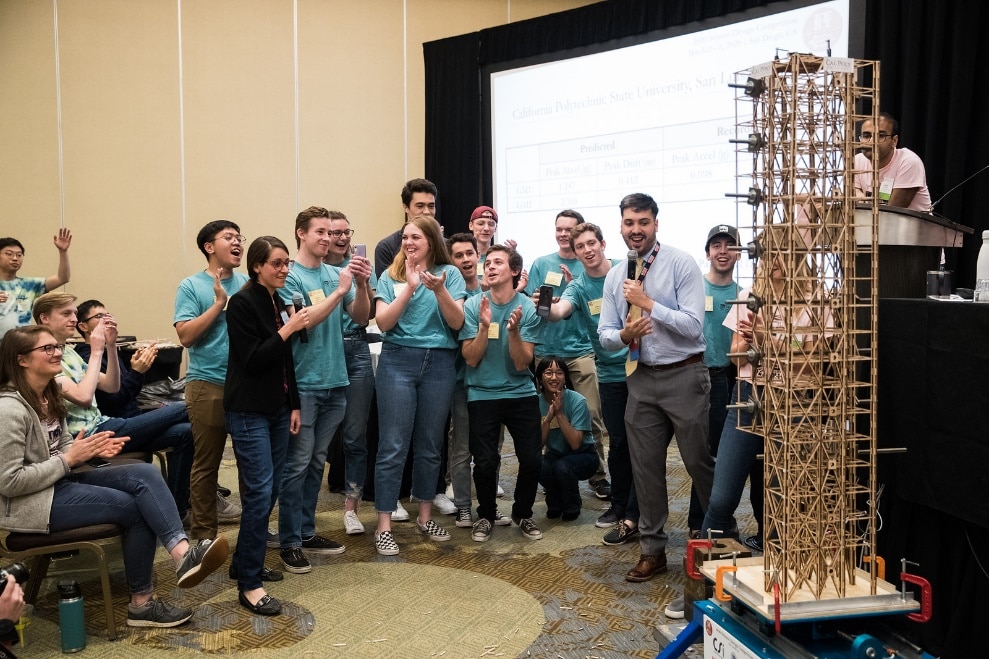
Cal Poly Architectural Engineering EERI Seismic Design Team Wins Second Place
SAN LUIS OBISPO – A team of Cal Poly architectural engineering (ARCE) students placed second in the Earthquake Engineering Research Institute (EERI) Seismic Design Competition (SDC) in early March in San Diego.
The Cal Poly team competed against 46 other university teams from throughout the U.S. and countries such as Canada, the Dominican Republic, Ecuador, Egypt, Malaysia, Mexico, Turkey and Romania.
The Cal Poly team’s months-long preparation involved writing a design proposal; constructing a 5-foot-tall balsa-wood model to survive two shake-table ground motions; refining computer simulations to accurately predict the model’s performance; and developing communication materials, including a poster and oral presentation. Their efforts led to a second-place award for presentation and poster, third in proposal, and fifth for architecture.
Fourteen students were accompanied by ARCE Assistant Professor Anahid Behrouzi, Cal Poly’s EERI student chapter faculty advisor. Of this group, 12 undergraduates participated in the competition. Jenna Williams, graduate student and, past EERI seismic design competition team captain, served as this year’s chair. Students Alejandra Bravo and Nicholas Slavin presented research with Behrouzi during a talk titled “Leveraging ArcGIS Mapping: Investigation of Concrete Building Damage after 2017 Mexico Earthquake.”
“Our Top 10 performance in the competition sub-categories led to significant bonus points for our team,” Behrouzi said. “The students’ quality construction and the model’s outstanding seismic performance under shake-table testing helped the team rank second overall.”
In conjunction with the competition, team members Autumn Wagner and Ryan Millward coordinated office tours to three firms — longtime Cal Poly supporters were KNA Structural Engineers in Irvine and LPA and KPFF in San Diego — for discussions on their recent projects involving novel seismic design solutions.
Sponsors of the Cal Poly team included: John A. Martin & Associates, KNA Structural Engineers, Harris & Sloan, FTF Engineering, the Cal Poly Instructionally Related Activities program, and the ARCE Department.
Technical advisors included Behrouzi and other ARCE faculty members Peter Laursen, Graham Archer, Kevin Dong, and John Lawson; Civil Engineering faculty and staff members Robert Moss, Charles Chadwell, and Xi Shen; and industry members David Cocke of Structural Focus and Alex Mueller of KPFF.
Cal Poly has participated in the EERI Seismic Design Competition since 2007 — taking first out of 19 teams in 2009 and placing second out of 28 teams in 2011.
About Cal Poly’s Architectural Engineering (ARCE) Program
For nearly 75 years, the Cal Poly ARCE program has embodied the university’s Learn by Doing credo. Focusing heavily on structural engineering with an emphasis in seismic design, the ARCE curriculum is a unique blend of theory and practice. The program is highly interdisciplinary, integrating architecture studios and construction management courses, thus providing students with a thorough understanding of the broader design/construction process. The acclaimed four-year Bachelor of Science degree is ABET accredited, and graduates typically become licensed as structural engineers. The ARCE program also offers a Master of Science in architectural engineering program. With its in-classroom innovation, connection to industry, and high job placement rate, graduates of the ARCE program are among the most sought after in the country and have gone on to shape our built environment. To learn more, visit arce.calpoly.edu.
Photo information / Attached:
EERI-1.jpg — Cal Poly Seismic Design team constructing the balsa wood tower.
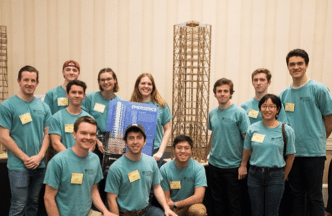
EERI-2.jpg — Cal Poly Seismic Design Team at the competition with balsawood tower and poster.
Image Credit: CSI Inc.
EERI-3.jpg — Cal Poly Seismic Design Team celebrates structure’s survival after both ground motions. Image Credit: CSI Inc.
# # #
COTE Top Ten for Students: Competition Winners
Program honors exceptional student design projects that showcase innovation in sustainability.
For Immediate Release:
Washington, D.C. – April 22, 2019 – The American Institute of Architects Committee on the Environment (AIA COTE) in partnership with the Association of Collegiate Schools of Architecture (ACSA), are announcing award recipients of the 2019 AIA COTE Top Ten for Students Competition.
The competition recognizes ten exceptional studio projects that integrate creative and innovative design strategies working towards achieving carbon-neutral operations through daylighting, passive heating and cooling systems, sustainable materials, water conservation, energy generation, and other sustainable systems.
The program challenged students to submit projects that use a thoroughly integrated approach to architecture, natural systems, and technology to provide design solutions that protect and enhance the environment. Award recipients for this year’s COTE Top Ten for Students Competition are:
ACCLIMATE: Philip Riazzi, and Cameron Foster
Clemson University
Faculty Sponsors: Ulrike Heine, David Franco, and Daniel Harding
Shore of a Hundred Islands: Viviani Isnata, and Maria Ulloa
California College of the Arts
Faculty Sponsor: Evan Jones & Margaret Ikeda
Dyads: Thomas Valcourt, Karl Greschner, and Philippe Bernard
Université Laval
Faculty Sponsors: Claude Demers, and André Potvin
The Fly Flat: Cynthia Suarez-Harris, Ledell Thomas, and Kennia Lopez
Prairie View A&M University
Faculty Sponsors: Shelly Pottord, Shannon Bryant, and April Ward
“The Happy Land” | An Antiquarium for Torre Annunziata: Haley Teske
Montana State University
Faculty Sponsors: Bradford Watson, and Jaya Mukhopadhyay
Healing Habitats: Innovation Center for Disease and Water Management: Catherine Earley, Elena Koepp, and Sabrina Ortiz
University Oregon
Faculty Sponsor: Brook Muller
Transfusion: Tapering Tucson: Cole Robinson, and Michael Horan
Clemson University
Faculty Sponsors: Ulrike Heine, Daniel Harding, and David Franco
Wallingford W2E: Sean Anderson, Tobias Jimenez, and Haley Ladenburg
Washington State University
Faculty Sponsor: Omar Al-Hassawi
Après le Déluge: Will Letchinger, and Jonathan Wilkinson
Rice University
Faculty Sponsor: John Casbarian
Coolth Capitalism: Peter Lazovskis, and Thomas Schaperkotter
Harvard GSD
Faculty Sponsor: Matthew Soules
You can get more information and see renderings of these projects here: 2019-COTE-Winners
The competition jury includes: Mary Demro, Montana State University; David Dowell, El Dorado Inc.; Bradford Grant, Howard University; and Matthew Noblett, Behnisch Architekten/Partners.
Complete details for each project are available on ACSA’s website: 2019-COTE-Winners. High-resolution rendering requests can be obtained from agann@acsa-arch.org. The projects will be on display at the 108th ACSA Annual Meeting in March 2020.
###
The American Institute of Architects, Committee on the Environment (AIA COTE) & Association of Collegiate Schools of Architecture (ACSA) Announce the 2017 AIA COTE Top Ten for Students Winners
For Immediate Release:
Washington, D.C. – April 19, 2017 – The American Institute of Architects Committee on the Environment (AIA COTE), in partnership with the Association of Collegiate Schools of Architecture (ACSA), have selected the recipients of the AIA COTE Top Ten for Students. The competition recognizes ten exceptional studio projects that seamlessly integrate innovative, regenerative strategies within their broader design concepts. The program challenged students to submit projects that use a thoroughly integrated approach to architecture, natural systems, and technology to provide architectural solutions that protect and enhance the environment.
The jury for the AIA COTE Top Ten for Students includes: Jessica Nutz, University of North Carolina at Charlotte; John Quale, University of New Mexico; Holly Samuelson, Harvard University; Lisa Matthiessen, U.S. Green Building Council & Greg Mella, SmithgroupJJR. Listed below are the names of the recipients, their school, the faculty sponsor, and project title.
Listed below are the names of the recipients, the faculty sponsor, project title and their school.
You can get more information and see renderings of these projects here: https://www.acsa-arch.org/competitions/2017-cote-competition/winners/
Karin Bjorkman
Faculty Sponsors: Sandy Stannard & Daniel Wiens
A Residential School in Andhra Pradesh
California Polytechnic State UniversityTaylor Metcalf
Madeline Cunningham
Faculty Sponsors: Margaret Ikeda, Evan Jones, & Adam Marcus
SubOrdinate
California College of the ArtsJames Woods
Christopher Sandkuhler
Elizabeth Widaski
Faculty Sponsors: Ulrike Heine, Henrique M. Houayek, Ufuk Ersoy, & David Francobr
Landscape in Motion
Clemson UniversityCharlie Cotton
Faculty Sponsors: Laura M. Briggs & Jeff Geisinger
Urban Ecology: Crossing Boundaries
Rhode Island School of DesignAdam Smith
Rachel Elbon
Faculty Sponsor: Kevin Stevens
Gastronomia: Sustainable Agriculture
University of Tennessee-KnoxvilleShawn Barron
Saranya Panchaseelan
Faculty Sponsor: Ulrike Passe
The Apicenter
Iowa State UniversityEstefania Barajas
Jorden Gomez
Faculty Sponsors: Ian Caine & Rahman Azari
Housing a Million
University of Texas at San AntonioKurt G. Kimsey
Matthew Wieber
Faculty Sponsors: Miguel Calvo Salve & Russell B. Roberts
NURTURE: Lehigh Living Cultural Center
Marywood UniversityAnushka Pai
Faculty Sponsors: Silvia Acosta, Laura M. Briggs, & Jeff Geisinger
Oscillating States
Rhode Island School of DesignRobin Wilder
Faculty Sponsors: Steven P. Juroszek, Thomas McNab, & Jaya Mukhopadhyay
The Culture and Production of Home: Encouraging Sustainable Lifestyle Through Tiny Dwellings
Montana State University
The selected projects will be on view at the American Institute of Architects Annual Convention in Orlando (April 2017) and the 106th ACSA Annual Meeting in March 2018. For high resolution renderings please email pvonier@acsa-arch.org.
+ Download this Press Release, 2017 COTE Top Ten for Students (PDF)
—
About the Association of Collegiate Schools of Architecture (ACSA)
Founded in 1912, The Association of Collegiate Schools of Architecture (ACSA) mission is to advance the quality of architectural education. School membership in the ACSA includes over 250 schools in several membership categories. These include full membership for all accredited programs in the United States and government- sanctioned schools in Canada, candidate membership for schools seeking accreditation, and affiliate membership for schools for two-year and international programs. Through these schools, over 5,000 architecture faculty are represented. In addition, over 500 supporting members composed of architecture firms, product associations and individuals add to the breadth of interest and support of ACSA goals.
Visit www.acsa-arch.org.
About The American Institute of Architects (AIA)
Founded in 1857, the American Institute of Architects consistently works to create more valuable, healthy, secure, and sustainable buildings, neighborhoods, and communities. Through nearly 300 state and local chapters, the AIA advocates for public policies that promote economic vitality and public wellbeing. Members adhere to a code of ethics and conduct to ensure the highest professional standards. The AIA provides members with tools and resources to assist them in their careers and business as well as engaging civic and government leaders, and the public to find solutions to pressing issues facing our communities, institutions, nation and world.
Visit www.aia.org.
view | Dynamic Glass
For forward thinking, energy conscious builders and architects who want the best for their occupants, View Dynamic Glass offers intelligent windows that maximize natural light and unobstructed views while reducing hear and glare.
Visit www.viewglass.com
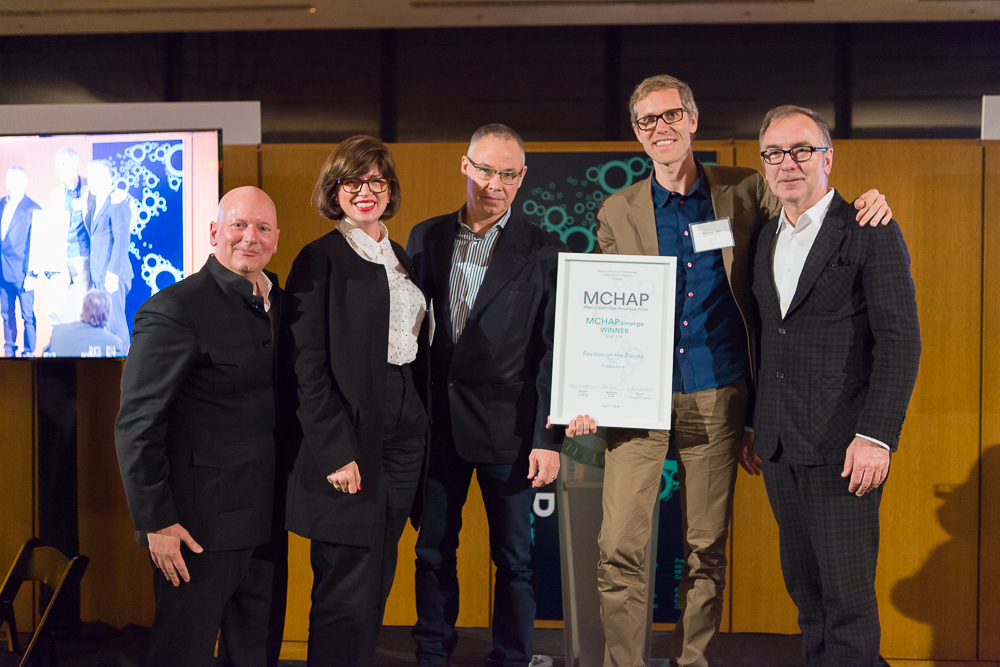
Photo Caption: Left to Right: MCHAP Director Dirk Denison, Jury Member Florencia Rodriguez, Jury President Stan Allen, MCHAP.emerge winner Wonne Ickx representing Productora, Jury Member Dean Wiel Arets.
MCHAP.emerge 2014/15 WINNER ANNOUNCED
Award for Emerging Architecture Goes to Pavilion on the Zocalo; Mexico City, Mexico by Productora
Chicago, Illinois – April 4, 2016 – Illinois Institute of Technology (IIT) College of Architecture Dean Wiel Arets, Mies Crown Hall Americas Prize (MCHAP) 2014/15 Jury President Stan Allen, MCHAP 2014/15 Juror Florencia Rodriguez, and MCHAP Director Dirk Denison announced the MCHAP.emerge 2014/15 Winner, Pavilion on the Zocalo; Mexico City, Mexico; Productora, at the April 1, 2016 MCHAP.emerge Symposium and Award Dinner at S. R. Crown Hall, the home of IIT College of Architecture.
The authors of the winning project, represented at the MCHAP.emerge Symposium by Wonne Ickx, will be recognized with the MCHAP.emerge Award, the MCHAP Research Professorship in the College of Architecture at Illinois Institute of Technology for the 2016/17 academic year, and funding of up to $25,000 USD in support of research and a publication related to the theme of “Rethinking Metropolis.”
The MCHAP.emerge 2014/15 Symposium included afternoon sessions during which the practices of the finalist projects presented their work and engaged in substantive discussions with the jury, the IIT Architecture faculty and student body, as well as the larger MCHAP Network and Chicago architecture community. In addition to Pavilion on the Zocalo; Mexico City, Mexico; Productora, the MCHAP.emerge 2014/15 Finalists included:
C.I.D.; Road to Ayquina, Chile; Emilio Marin & Juan Carlos Lopez Arquitectos
Haffenden House; Syracuse, United States; Jon Lott, PARA Project
OZ Condominiums; Winnipeg, Canada; 5468796 Architecture
San Francisco Building; Asunción, Paraguay; Jose Cubilla & Asociados
The MCHAP.emerge 2014/15 Finalists were selected by the MCHAP 2014/15 Jury from among the 55 MCHAP.emerge 2014/15 NOMINATED WORKS of architecture in the Americas, realized between January 2014 and December 2015, which have been put forward by 95 nominators from throughout the Americas. Nominations were received in January and February and were included in the MCHAP 2014/15 Exhibition held at S. R. Crown Hall on March 4th and 5th at which time the jury held its first jury session.
The MCHAP 2014/15 Jury includes Jury President Stan Allen, architect and former Dean of Princeton University’s School of Architecture (New York); Florencia Rodriguez, editorial director of Piedra, Papel y Tijera publishers (Buenos Aires); Ila Berman, Professor of Architecture, University of Waterloo (Waterloo); Jean Pierre Crousse of Barclay & Crousse (Lima), and Dean Wiel Arets (Chicago).
MCHAP is a biennial prize that acknowledges the best built works of architecture in the Americas. MCHAP.emerge is the corresponding biennial prize for the best built work from an emerging architecture practice. MCHAP was created by Dean Wiel Arets who, in his 2013 inaugural address, offered “Rethinking Metropolis” as a strategic device for the college, for research, for the development of knowledge and skills, for taking part in design exercises, for debate, and for making. Dean Arets outlined his plan for a revitalized curriculum in NOWNESS, a publication in which he announced MCHAP among other initiatives. MCHAP was officially launched in February 2014 at an event hosted by Phyllis Lambert at the Canadian Centre for Architecture in Montreal and which featured Kenneth Frampton, President of the inaugural MCHAP Jury.
MCHAP Finalist Announcement in late June
The MCHAP Jury will announce the finalists for the MCHAP 2014/15 in late June after the jury tour of the finalist sites. The tour will include visits with members of the MCHAP Network of architects, academics, and schools and is part of a strategy to build a vibrant network that unites architects working in the Americas and opens the discourse with others around the world. The exact date of the finalist announcement is to be determined.
MCHAP Symposium and Winner Announcement on October 19, 2016
IIT ‘s College of Architecture will host a day-long symposium including sessions for students, faculty and the architects and clients of the finalists in dialogue about the nominated works and how they contribute to the college’s continuing conversation — Rethinking Metropolis. Later in the afternoon, the general public will be invited to a moderated discussion between the architects and jury about the context of contemporary practice. At the end of the day of activities the winner of the Americas Prize 2014/15 will be announced at the MCHAP Award Dinner. The author of the MCHAP winner will be recognized with the MCHAP Award, the MCHAP Chair at IIT College of Architecture for the following academic year, and funding of up to $50,000 USD, in support of research and a publication related to the theme of ‘Rethinking Metropolis.’
For more information about MCHAP and MCHAP.emerge, MCHAP.student, their purpose, process and timeline, visit http://www.mchap.org.
IN THE NEWS
Drawing Ambience: Alvin Boyarsky and the Architectural Association is the first public museum exhibition of drawings from the private collection of Boyarsky, arguably one of the most influential figures in 20th-century design education and the longtime chair of the Architectural Association in London. It also explores Boyarsky’s role as a collector of drawings and, metaphorically speaking, of the ideas and people that have come to define a key moment in architectural history. The exhibition is co-organized by the Mildred Lane Kemper Art Museum and the Museum of Art Rhode Island School of Design (RISD Museum). It is curated by Igor Marjanovi_, associate professor of architecture in the Sam Fox School, and Jan Howard, curator of prints, drawings and photographs and curatorial chair at the RISD Museum. Marjanovic participated in numerous programs related to the exhibition, including gallery talks and a panel discussion with Chris Bardt, Jan Howard, and Lesley Lokko.
–
Assistant professor Derek Hoeferlin and associate professor John Hoal presented a MISI-ZIIBI workshop studying climate change issues in Brisbane, Australia, during the Deltas in Times of Climate Change conference. Hoeferlin and Hoal, were both instrumental in the redesign of New Orleans after Hurricane Katrina. In addition, the two faculty took a ride down the Mississippi River with KPLR’s Patrick Clark in an effort to encourage St. Louis residents to look towards the future. Work for MISI-ZIIBI: Living with the Great Rivers was also featured in an exhibit at the United Nations Framework Convention on Climate Change Conference. Their exhibit, funded in part by a WUSTL I-CARES grant, will display multidisciplinary research that deploys a workshop framework methodology and climate adaptation performance model for climate change scenario planning for multiuse “fluvial zones” along the Mississippi River basins and abroad. Lecturer Jonathan Stitelman produced the exhibit design.
–
Associate professors Sung Ho Kim and Heather Woofter, co-founders of Axi:Ome, discussed ways urban spaces can connect through art at the CEL Center for Architecture + Design, as part of St. Louis Design Week.
–
Associate professor Zeuler R. Lima, PhD, delivered the opening lecture for the exhibition 3 Sites, Lina Bo Bardi, organized in collaboration with the Johann Jacobs Museum in Zurich. He we also deliver a lecture on his book “Lina Bo Bardi” at the 4th Symposium of Museum Architecture at the University of Lisbon, Portugal. In addition, Lima traveled to Germany to help set up a video he produced for the exhibition Lina Bo Bardi, 100, on view November 13-February 22 at the Architekturmuseum at the Technische Universität München. Lima also delivered a November 14 lecture at the symposium that accompanied the launch of the exhibition catalogue. On December 11, Lima delivered a lecture in Paris on his book and presented “Lina Bo Bardi, curator,” the short pedagogical film he wrote and produced about the architect’s museological experience and thought-provoking proposals. Last, the curators of the Museum of Modern Architecture at MAXXI, Rome, recently interviewed associate professor Lima about “Lina Bo Bardi,” his biographic book on the Italian-Brazilian architect. The interview will be included in the museum’s exhibition about Bo Bardi’s Italian experience, along with a video documentary Lima prepared for the show, which is on view December 18-March 15.
–
Robert McCarter, the Ruth and Norman Moore Professor, discussed his new book on the work of Alvar Aalto in a lecture at the Saint Louis Art Museum. The Finnish architect and designer was one of the 20th-century’s most popular and accessible Modernist masters. A book signing will follow the lecture.
–
Kelley Van Dyck Murphy and Lavender Tessmer, both lecturers in architecture, were among the winners of Sukkah City STL 2014: Between Absence and Presence. Presented by St. Louis Hillel and the Sam Fox School, the contemporary design competition challenged participants to reimagine the traditional Jewish sukkah through the lens of contemporary art and architecture. Ten cutting-edge sukkahs by architects and designers from around the nation were installed on campus.
–
Senior lecturer in architecture Pablo Moyano Fernández presented the abstract Self-sufficient Housing in St. Louis at the Housing Education Research Association conference. The abstract speculates about why and how the city of St. Louis lost an alarming part of its population and suggests possibilities for the future. The presentation showcases a selection of design studio projects that address emergent challenges for future generations of designers.
–
Associate professor John Hoal, a founding partner of H3 Studio, is leading a team of local, national, and internationally known experts as finalists in a global design competition to improve river management and the rebuilding of the lower Mississippi River Delta. Titled Changing Course: Navigating the Future of the Lower Mississippi River Delta, the competition aims to halt land loss and restore the delta ecosystem while improving navigation and strengthening the resilience of local communities and industry. In addition to Hoal, WUSTL is represented with assistant professor Derek Hoeferlin, and several alumni serving on the H3 Studio design team, including project manager Matthew Bernstine (MUD14), as well as Laura Lyon (MArch00), Bryan Robinson (MArch04), Tim Breihan (MArch/MUD08), Courtney Cushard (MUD11), Colleen Xi Qiu (MArch/MUD12, MSAS13), and Junru Zheng (MLA14). In addition, Hoal sat down with a diverse panel of water experts and offered an important thought on “How we can reconstruct our neighborhoods, our cities, and our region to actually be water responsive, water-based cities” as part of Nine Network’s Stay Tuned.
–
Visiting assistant professors Ersela Kripa and Stephen Mueller collaborated with artist Wendy Mark on an installation that is featured in Mark’s exhibition Beginning with Square One. Cloudspace is a custom-fabricated spatial and optical device that interprets and expands Mark’s work. Kripa and Mueller designed, fabricated, and installed the project; their project team included MArch students Yu Xin and Bin Feng, who assisted with the digital design and production files. Other students assisted in the prototyping process in the School’s fabrication lab.
–
HUB: Hybrid Urban Bioscapes, a project led by assistant professor Catalina Freixas and senior lecturer Pablo Moyano, has been awarded a Neighbors Naturescaping grant. Their project aims to increase biodiversity in Old North St. Louis through the implementation of a rain garden and a nectaring garden. These small planting areas will allow the HUB team to register the project as part of the Milkweeds for Monarchs Initiative and help St. Louis reach its target of 200 new monarch gardens in 2014.
–
The West End Neighborhood Sustainability Plan, produced by Master of Urban Design students, is the recipient of this year’s Outstanding Student Project Award from the Missouri Chapter of the American Planning Association. The plan was produced for the spring 2014 course Contemporary Practices of Sustainable Urbanism, taught by associate professor John Hoal, with Colleen Xi Qiu (MArch/MUD12, MSAS13) serving as a teaching assistant.
–
Over the past two decades, the rise of “material studies” has energized various disciplines by proposing objects as the very object of study, thereby opening up new and vital questions about many well-trodden topics. This two-day symposium explored how material culture and artistic production have helped generate political change from antiquity to the present. Several members of the Sam Fox School discussed their papers: Jesse Vogler, visiting assistant professor, Monika Weiss, associate professor, Sabine Eckmann, William T. Kemper Director and chief curator. In addition, Anna Vallye, postdoctoral research associate, moderated comments and discussion as the discussant for the panel on Spatialization.
–
In 1974, more than 450 students, scholars, and practitioners from across the country came to Washington University to have courageous conversations about the status of women in architecture and allied fields. On November 7-9, the Sam Fox School marked the symposium’s 40th anniversary with Women in Architecture 1974 | 2014, a three-day event that celebrates the achievements of the last four decades but also underscores the need for continuing conversation–and action.
–
Art + the Brain: Stories and Structures explored the complex histories, practices, and interconnections between art, architecture, medicine, and neuroscience with the human brain as a central focus. Participants included the Sam Fox School’s Sung Ho Kim (associate professor of architecture), Ron Leax (Halsey C. Ives Professor of Art), and Patricia Olynyk (director of the Graduate School of Art); WUSTL Arts & Sciences professors Rebecca Messbarger, Kathy Miller, and Larry Snyder; and Mark Cohen and Jim Gimzewski, and was co-sponsored by UCLA’s Art | Sci Center and Lab, the Sam Fox School, and WUSTL’s Skandalaris Center for Entrepreneurial Studies.
–
The O’Fallon Neighborhood Community Development and Design Program is one of 10 recipients of this year’s Outstanding Local Government Achievement Awards, presented by the East-West Gateway Council of Governments. The program is a collaboration between the Brown School’s Alliance for Building Capacity, Lou Colombo, the City of St. Louis, the O’Fallon Community Development Organization, and the North Newstead Association. As part of a fall 2012 course, visiting assistant professor Justin Scherma and Colombo led a team of students from both the Sam Fox School and the Brown School–including Alfredo Zertuche (MArch14), Binqi Luo (MArch15), Dustin Garness (BA11/MSW13)–in working with the community on housing and commercial center plans for the project. Neighborhood residents provided long-term vision statements, described desired outcomes, and prioritized strategies. The plans will be submitted for adoption by the City of St. Louis and provide a model for university-enabled neighborhood planning that is designed to give voice to disadvantaged citizens interested in working to improve their neighborhood.
–
This fall, Downtown STL, Inc. and the Sam Fox School partnered to explore adaptive reuse possibilities for the Railway Exchange Building, working in cooperation with the owners of the iconic structure. At a December 10 reception and exhibition, students from Metamorphic Cities: Sustainable Strategies for Adaptive Reuse, a graduate architecture studio led by assistant professor Catalina Freixas, presented their responses to a call for innovative design ideas to reimagine the 21-story high-rise building, reinvigorate the surrounding area, and contribute to the continuing transformation of downtown St. Louis.
–
Eric Mumford was appointed the Rebecca and John Voyles Professor of Architecture, Sam Fox School of Design & Visual Arts, and a Faculty Scholar, Institute for Public Health, at Washington University in St. Louis. He also recently published two peer-reviewed articles: Eric Mumford, “The Changing Forms of Metropolitan North America,” in Evelien van Es, et al. eds., CIAM 4 and comparative analysis (Bussum, the Netherlands: Thoth, 2014) and Eric Mumford, “Alvar Aalto’s Urban Planning and CIAM Urbanism,” Alvar Aalto-Second Nature (Weil-am-Rhein, Germany: Vitra Design Museum, 2014).
–
The curators of the Bienal Internacional de Arquitectura de Argentina awarded the Montessori Children’s School project submitted by Raymond E. Maritz Professor Adrian Luchini “Distinguished” honors (the equivalent of second prize) in the Landscape and City category. The project, which features an addition to an existing facility in St. Louis, sought to “operate within those aesthetic canons that normally define the lack of concrete identity in all suburbia in the U.S., while trying to radically change the existing image of a building from the ’60s.”
JOHN HOAL, PhD, Associate Professor and Chair of the Doctor of Sustainable Urbanism and the Master of Urban Design programs for the Sam Fox School of Design & Visual Arts and founding partner of H3 STUDIO, leads an international, national and local team of experts known as STUDIO MISI-ZIBBI – as finalists in a global design competition to improve river management and the rebuilding of the lower Mississippi River Delta.
Titled “Changing Course: Navigating the Future of the Lower Mississippi River Delta,” the competition aims to halt land loss and restore the delta ecosystem while improving navigation and strengthening the resilience of local communities and industry. The final designs are intended to assist Louisiana coastal planners and engineers with developing the state’s 2017 Coastal Master Plan.
Besides H3 STUDIO other members of this carefully selected 35 member expert team include design professionals from URS, HKV, Robbert de Koning Landscape Architect, Colectivo, Delft University of Technology, Washington University in St Louis, M.I.T., HR&A Advisors, Dynamic Solutions, Bureau Drift Ecological Planning, Coastal Environments, Inc. AEP River Operations, and Louisiana-based experts from Louisiana State University, University of Louisiana at Lafayette, Louisiana State University, University of New Orleans, and Tulane University (see http://changingcourse.us/team_finalists/ for a complete list).
“It is a real privilege to lead an incredible and unique international collaboration to develop design solutions that could be implemented over many years which will result in the rebuilding of a sustainable living delta for one of the world’s greatest river systems – The Mississippi River.” Says JOHN HOAL
Washington University in St Louis is well represented with Derek Hoeferlin, assistant professor of architecture a member of the core team, and alumni Matthew Bernstine as project manager and Laura Lyon, Bryan Robinson, Tim Breihan, Courtney Cushard, Colleen Xi Qui, and Junru Zheng as members of H3 STUDIO design team. Hoal and Hoeferlin had previously collaborated on water management strategies in New Orleans and organized MISI-ZIIBI: Living with the Great Rivers, an international design workshop investigating climate adaptation strategies along the Mississippi.
Over the next five months, each team will develop a preferred design for the Lower Mississippi River system, including using the natural power of the Mississippi River to protect and restore the delta landscape while addressing the needs of navigation, flood risk management, fisheries and coastal communities.
“In a very strong competition, these winning teams stood out because their experts bridge strong regional knowledge with innovative ideas from deltas around the world,” said Carlton Dufrechou, general manager of the Lake Pontchartrain Causeway and a member of the Changing Course leadership team. “We are confident these teams have the vision and experience to develop bold solutions for the delta and our people, economy and culture.”
Changing Course is a design competition aimed at developing innovative solutions to rebuild and protect the Louisiana coast. It is supported by The Rockefeller Foundation, Shell, Blue Moon Fund, Greater New Orleans Foundation, The Kresge Foundation, The Selley Foundation and The Walton Family Foundation; with leadership support from Van Alen Institute, a nonprofit organization that mobilizes the power of design to transform cities, landscapes and regions to improve people’s lives, and Environmental Defense Fund, which has 30 years of experience in the Mississippi River Delta region; and with technical support from BuroHappold Engineering, a worldwide consulting and engineering firm.
More information on Changing Course is available at www.changingcourse.us.
Follow Changing Course on Twitter at @ChangingCourse and on Facebook at facebook.com/ChangingCourse.us.
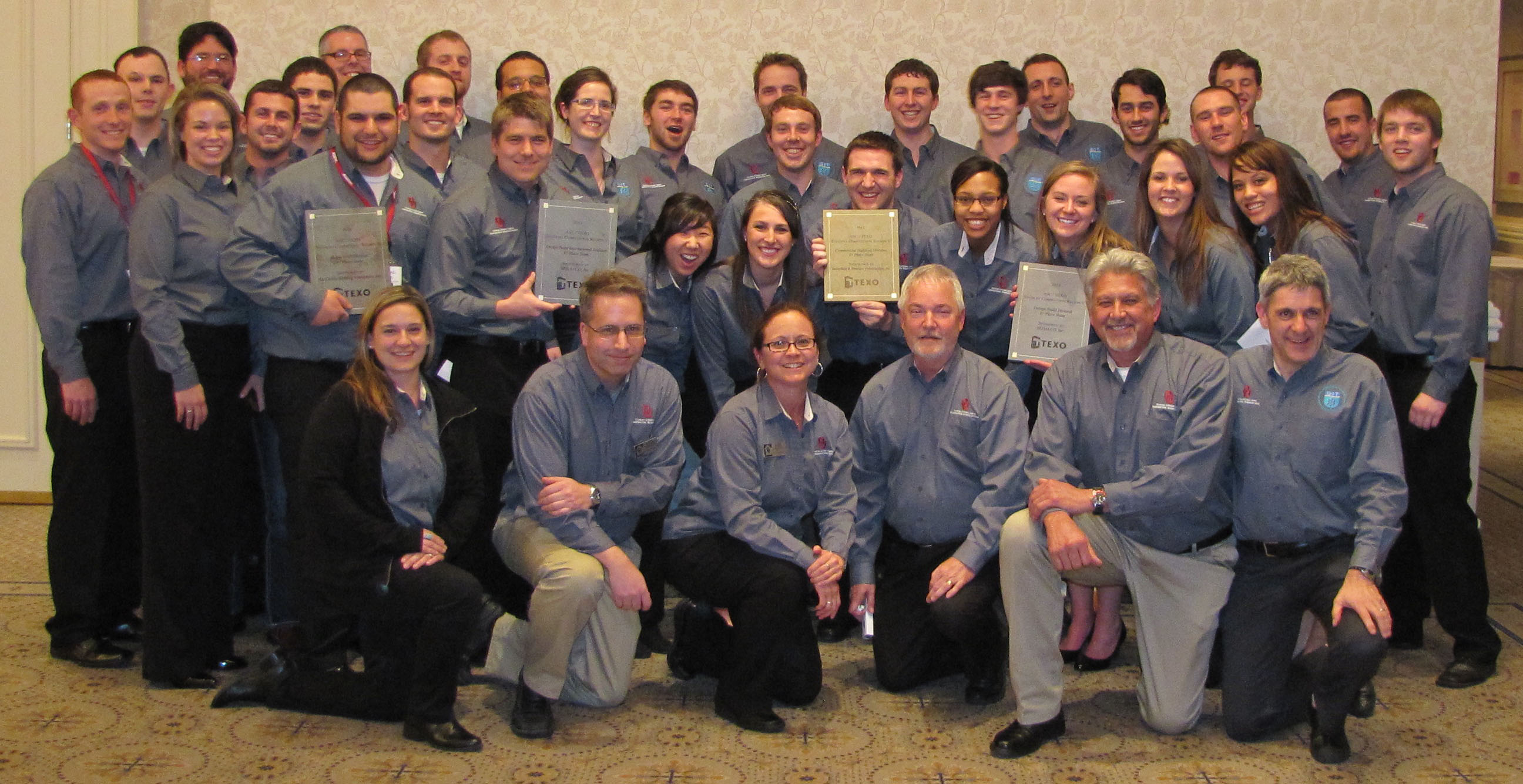
The University of Oklahoma joined Harvard University as one of only two universities with multiple teams honored in the 10th annual Urban Land Institute Gerald D. Hines Student Urban Design Competition. One OU team received an “Honorable Mention First Place” and the other an “Honorable Mention Overall Merit” in the competition, placing them both in the top 10 percent of the field, which consisted of 139 graduate-level teams from 64 universities throughout United States and Canada. Serving as advisers were Blair Humphreys, executive director of the Institute for Quality Communities, and Associate Professor of Architecture Hans Butzer. “The Veranda” placed fifth receiving “First Place Honorable Mention” and featured a dynamic public space connected to the Buffalo Bayou trail network. The team members were fifth-year architecture students Adelle York, who served as team leader, Aric Yarberry and Grant Hromas; regional and city planning graduate student Ty McCarthy, and MBA student Ohm Devani. “The Foundry” received an “Honorable Mention Overall Merit” for their proposal to create a district designed to empower startup entrepreneurs. Members of the team were regional and city planning graduate students Phillips Walters, who served as the team leader, and Shane Hampton; landscape architecture graduate student Alex Tyler; architecture graduate student Grant Evert, and fifth-year architecture student Preston Kunz. Read more.
University of Oklahoma architecture and construction science students made history by winning all categories of the 17th Region V Associated Schools of Construction/TEXO Student Competition, a first for any university in the region and a first for the competition. The OU students won in the Commercial Building, Design Build, Design Build International, and Heavy Civil categories of the competition held in Dallas. The teams were coached by Tammy McCuen, OU assistant professor of construction science, and Anthony Cricchio, OU assistant professor of architecture (Design Build); Ken Robson, OU construction science professor, and Dublin Institute of Technology Professor Lloyd Scott (International Design Build); Dominique Pittenger, OU adjunct professor of construction science (Heavy Civil); and Richard Ryan, OU professor of construction science (Commercial Building). Read more.
The OU College of Architecture will remodel an old nearby hotel that was damaged in a 2009 fire. The Alvis Hotel in Pauls Valley suffered fire damage in Sept. 2009. The students, alongside associate professor of architecture Ron Frantz, will assist in the remodeling of the hotel, which was built in the late 1800s. The Alvis property is working toward being registered with the National Register of Historic Places, which will open the project up to tax credits and federal funding to allow the students a large amount of leeway, Frantz said. Read more.
Faculty in the College of Architecture will present papers and research during our second annual Research and Creative Activity Day on March 14, 2012. See the full schedule and topics.
Designers James Burnett and Jereck Boss of Project 180, the significant street and public space overhaul underway in downtown Oklahoma City, will speak about their work in Norman and Oklahoma City as part of the Streets for People lecture series presented by the Institute for Quality Communities on Thursday, March 15, 2012.
See the winning projects: www.acsa-arch.org/timber
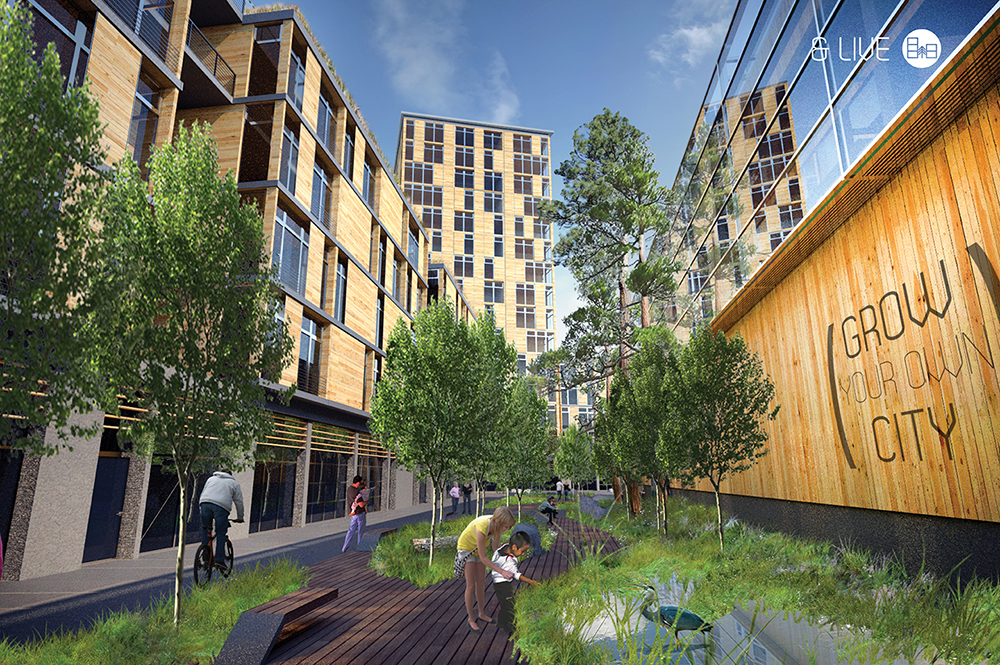
The competition focused on a site in the Brooklyn waterfront neighborhood of Red Hook, with a population of public housing residents and working artists and designers, and a number of new residential and commercial developments. With a focus on regenerating the urban manufacturing sector and addressing housing needs, entrants, working individually or in teams, were tasked with incorporating affordable housing units; a bike sharing and repair shop; as well as a vocational, manufacturing and distribution center for the innovative use of wood technology.
“Today, timber is being used in new, innovative ways to help address the economic and environmental challenges of the build environment,” said Cees de Jager, executive director of BSLC. “This competition brought to life the way the design community is recognizing the benefits of wood – from reduced economic and environmental impact to enhanced aesthetic value and structural performance – to design buildings and communities of the future.”
The projects will be on view at the Sheila C. Johnson Design Center at Parsons from October 24-31, and at the 2013 Greenbuild Conference in Philadelphia (November), the 2014 ACSA Annual Meeting in Miami (April) and the American Institute of Architects 2014 Convention in Chicago (June).
“The winning submissions for the Timber in the City competition embraced advances in timber and building technologies to address the economic and environmental considerations of the challenge in remarkable ways,” said Andrew Bernheimer, director of the Master of Architecture program at Parsons. “By situating the competition in Brooklyn, our goal is to catalyze the design community and government agencies to better recognize the potential of larger-scale wood design and construction in cities.”
Awards, totaling $30,000, were presented to teams of students and faculty and recent graduates for their unique celebrations of wood products.
First Place: “Grow Your Own City” – the University of Oregon’s winning submission attracted the jurors with its use of cross-laminated timber (CLT) as a new building technology to create a cost-effective, environmentally friendly solution for the Red Hook community. The team addressed the community’s need for livable and recreational areas that support a wide range of daily activities for inhabitants.
Second Place: “Cultivating Timber” – the University of Texas at Austin also leveraged CLT as the primary building material for their design. In working to reduce greenhouse gasses and embodied energy accompanied with transporting materials, the team proposed to bring the manufacturing equipment to the site and develop the CLT panels locally. Overall, designing a community that demonstrated the use of timber in an urban environment and worked to provide residents with sustainable living options.
Additionally, two student teams were selected as honorable mention winners:
As well as two individual recent graduates were selected as honorable mention winners:
The winning projects were chosen by a panel of distinguished jury members in the architecture community, including the following:
“We are exceptionally pleased with the turnout for the competition which is in its first year,” said Norman Millar, ACSA President. “Both the jury members and the involvement of more than 1,000 students and recent graduates created a very engaging dynamic for the future of timber construction. These young designers were challenged to examine the benefits that wood can offer for urban design projects.”
The competition ran from August 2012 through May 22, 2013 and included 1,082 student and recent graduate participants. The design jury met in July to select the winning projects and honorable mentions. For full details on the competition and the winning submissions visit https://www.acsa-arch.org/timber.
Association of Collegiate Schools of Architecture Founded in 1912 to advance the quality of architectural education, the Association of Collegiate Schools of Architecture (ACSA) represents all accredited programs and their faculty across the United States and Canada, as well as nonaccredited and international affiliate members around the world. ACSA, unique in its representative role for schools of architecture, provides a forum for ideas on the leading edge of architectural thought. Issues that will affect the architectural profession in the future are being examined today in ACSA member schools. The association maintains a variety of activities that influence, communicate, and record important issues. Such endeavors include scholarly meetings, workshops, publications, awards and competition programs, support for architectural research, policy development, and liaison with allied organizations. For more information, please visit www.acsa-arch.org.
Binational Softwood Lumber Council The Binational Softwood Lumber Council (BSLC), a nonprofit organization, was established in 2006 by the Canadian and U.S. governments. The BSLC champions the use of softwood lumber products as part of the shift to a more environmentally responsible and economically viable building sector. Sustainably harvested wood products from North America create jobs in rural communities, reduce costs and can help reduce the overall environmental footprint of a home or building. For more information, visit www.softwoodlumber.org.
Parsons The New School for Design Parsons The New School for Design is a global leader in design education, with programs that span the disciplines of design and the fine arts. Parsons prepares students to creatively and critically address the complex conditions of contemporary global society. Its curriculum is geared toward synthesizing rigorous craft with cutting-edge theory and research methods, and encourages collaborative and individual approaches that cut across a wide array of disciplines. The School of Constructed Environments at Parsons is the only integrated school of interior design, lighting design, product design and architecture in the country. For more information, please visit www.newschool.edu/parsons/sce.
Founded in 1912 by 10 charter members, ACSA is an international association of architecture schools preparing future architects, designers, and change agents. Our membership includes all of the accredited professional degree programs in the United States and Canada, as well as international schools and 2- and 4-year programs. Together ACSA schools represent some 7,000 faculty educating more than 40,000 students.
Enter your name and email below, and we’ll send you the latest ACSA news and events.
© Copyright 2026 ACSA